Federal Judge Awards $150 Million in Mother Emanuel Cases, Citing Russian Disinformation Campaign

By Javar Juarez | CUBNSC
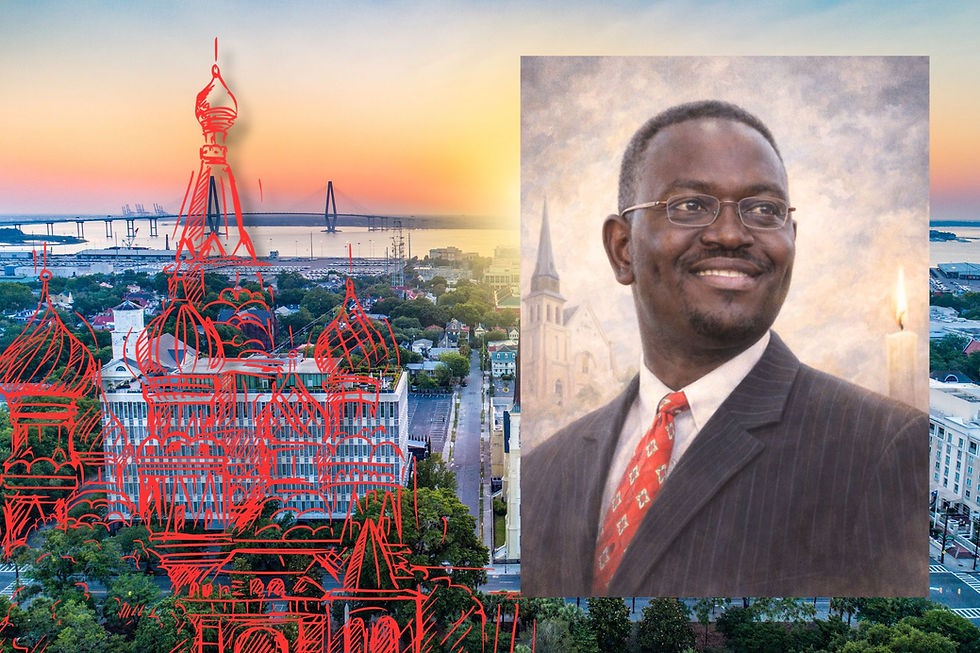
Charleston, S.C. - A federal judge in South Carolina has awarded a combined $150 million to two survivors of the 2015 Mother Emanuel AME Church massacre, issuing twin rulings that link a Russian disinformation campaign to one of the most horrific acts of racial violence in modern American history.
In two separate orders issued on April 20, 2026, U.S. District Judge Richard Mark Gergel granted default judgments against Russian entities including the Internet Research Agency, Concord Management, and Concord Catering. Each case resulted in $25 million in compensatory damages and $50 million in punitive damages, totaling $75 million per plaintiff and $150 million combined.
The rulings stem from lawsuits brought on behalf of M.P., the minor child of Rev. Clementa Pinckney, and K.M., a child who survived the attack while being shielded by her grandmother, Felicia Sanders. Both children were present during the massacre carried out by Dylann Roof on June 17, 2015.
A Legal Theory Upheld

At the center of both cases was a bold and largely untested legal theory: that foreign actors who intentionally spread racially divisive propaganda online can be held civilly liable when that conduct foreseeably contributes to real-world violence.
Judge Gergel agreed.
In both orders, the court found that the Russian defendants conspired to disseminate white supremacist content with the goal of inciting violence against African Americans, and that their actions were tied to the kind of attack carried out at Mother Emanuel.
The court went further, stating that the defendants “calculated their actions toward provoking an attack just like Roof’s,” a finding that underscores both intent and foreseeability.
Because the Russian entities failed to appear in court, they were found in default. However, the judgments were not automatic. The court evaluated whether the claims were legally sufficient and determined that they met the standards required under federal civil rights law.
The Ku Klux Klan Act in a Modern Context
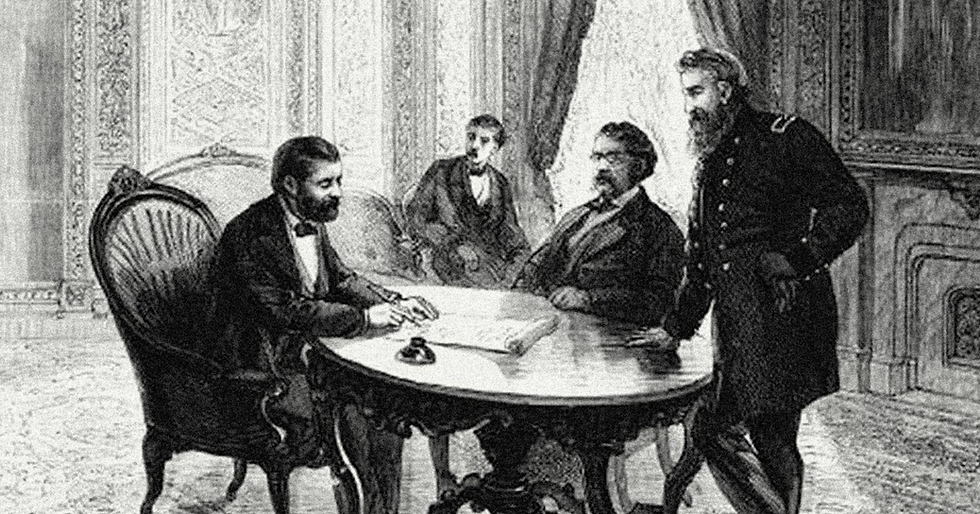
Both cases were brought under 42 U.S.C. § 1985(3), known as the Ku Klux Klan Act, a Reconstruction-era statute designed to combat racially motivated conspiracies.
The law allows plaintiffs to recover damages when two or more parties conspire to deprive individuals of their civil rights based on discriminatory intent. In these rulings, the court applied that framework to modern digital influence operations, extending civil rights liability into the realm of foreign information warfare.
The Human Cost

The decisions were grounded in detailed testimony about the lasting trauma suffered by both children.
In the M.P. case, the court heard that she hid during the massacre as her father, Rev. Pinckney, was murdered nearby. The court found that she continues to suffer from severe emotional harm, including the lifelong loss of parental guidance, support, and presence at key life moments.

In the K.M. case, testimony revealed that she was pushed to the floor and shielded from gunfire by her grandmother. She witnessed the killing of her uncle, Tywanza Sanders, and has endured years of psychological trauma and ongoing mental health challenges.
In both cases, the court found the testimony credible and the harm profound.
“Now We Have to Go Collect”

While the rulings represent a significant legal victory, the next phase may prove equally complex.
Attorney Dr. Francois M. Blaudeau, who represents the plaintiffs, confirmed that the focus now shifts to enforcing the judgments.
“Now we have to go collect,” Blaudeau told CUBNSC.
That effort will likely involve pursuing assets tied to the Russian defendants through the U.S. Treasury Department, particularly the Office of Foreign Assets Control (OFAC), which manages funds frozen under federal sanctions.
“We will try to obtain funds through OFAC,” Blaudeau said. “We will also try other areas of government.”
He acknowledged that the process may face resistance.
“There are always those things in play,” he said. “We will either go around or through them, but we will not stop until we have full accountability.”
When asked what those barriers might include, Blaudeau pointed to both institutional and political realities.
“Yes,” he said, referring to potential challenges involving federal agencies such as the Department of Justice or Treasury. “And politics.”
A Precedent with National Implications

The rulings could have far-reaching implications for how courts address the relationship between digital influence operations and acts of domestic terrorism.
By holding foreign actors liable under U.S. civil rights law, the decisions establish a potential pathway for victims to seek accountability beyond the individual perpetrator.
They also reinforce a growing recognition that disinformation campaigns are not merely political tools, but can contribute to real-world harm with lasting consequences.
For the families and survivors of the Emanuel Nine, the judgments mark a moment of legal recognition and a step toward accountability.
But as Blaudeau made clear, the fight is not over.
The court has spoken. The damages have been awarded.
Now, the question is whether those millions can be recovered—and whether accountability can extend beyond the courtroom.


Comments