Trump Ballroom Donor Wants Dominion. South Carolina Would Have to Live With the Deal.


NextEra’s takeover promises temporary bill credits while putting lasting control of an essential service in the hands of a company pursuing an enormous expansion.
By Javar Juarez | New Progressive Journal Feature | November 7, 2026
Columbia, S.C. - South Carolina regulators will hear from customers in North Charleston on Thursday, November 12, as NextEra Energy seeks permission to take control of Dominion.
The decision would place the utility serving roughly 820,000 customers across 24 South Carolina counties under the control of the Florida energy giant. South Carolina Department of Consumer Affairs
NextEra has offered residential electric customers an average $10 monthly bill credit for two years after the merger closes. That amounts to about $240. The company would keep control after the credits disappear.
Its chief executive, John W. Ketchum, has already taken his expansion plans to the Oval Office.
On September 30, Ketchum appeared with President Donald Trump and Commerce Secretary Howard Lutnick at an energy investment announcement. Ketchum praised the administration’s pursuit of “energy dominance” and said NextEra was spending “a billion dollars a week” to finance and build energy infrastructure. Presidential remarks

The company has also helped finance Trump’s Washington. Federal records show NextEra gave $1 million to the Trump Vance inaugural committee in December 2024. Reporting published in October 2026 identified another $4 million contribution, made in 2025, to the White House ballroom project.Together, those gifts put $5 million into the inauguration and ballroom project. Federal contribution filing, Utility Dive reporting
Connecticut Attorney General William Tong accused NextEra of using its $4 million ballroom donation to win support for the Dominion takeover. On October 16, he called the gift a “brazen attempt to curry favor with a compromised administration.”
Tong has urged federal energy regulators to reject the merger, warning that the combined company could raise costs and withhold energy supplies to increase its earnings at customers’ expense. His objection reaches beyond the donation: whether federal officials will protect customers from a company seeking greater control over the power supply. Tong’s statement
South Carolina has its own decision to make. Dominion’s customers will not choose their new parent company. The Public Service Commission will decide whether to allow the transfer.
That makes the question before commissioners much larger than a $10 credit: What would customers gain, what could they lose, and who would pay if NextEra’s expansion does not go as planned?
The business Ketchum wants to build

NextEra has given investors a clear explanation of what it wants from Dominion.
When the merger was announced in May, company leaders pointed to potential demand for roughly 130 gigawatts of electricity from data centers and other large customers.
They told investors they expected annual growth of at least 9 percent in adjusted earnings per share and about 11 percent in money invested in their regulated utilities through 2032. Virginia’s data centers were a major selling point. Company investor presentation and remarks
Dominion gives NextEra access to a utility serving one of the world’s most important concentrations of data centers. These facilities require enormous amounts of electricity. Supplying them can mean building power plants, substations and transmission lines.
That construction can generate years of earnings for a utility. When regulators approve an investment for recovery from customers, bills can include repayment of construction costs, financing expenses and an authorized return for shareholders.
The incentive to build is substantial. So is the responsibility to establish who needs the investment and who will pay for it.
Ketchum’s compensation reflects the scale of the enterprise. NextEra reported $24.19 million in total compensation for him in 2025, including stock awards, options and incentive pay.
Florida Power & Light chief executive Armando Pimentel received $12.24 million.
NextEra Energy Resources chief Brian Bolster received $9.17 million. These totals include the reported value of compensation awards. NextEra proxy statement
For customers, the risk begins when the company spends money in anticipation of demand that has not yet become dependable revenue.
A data center can open late. A developer can cancel. A large customer can use less electricity than expected. The loans and construction expenses do not disappear when that happens.
NextEra’s management has said large customers should pay their share. Whether that protects households depends on the contracts: how much a large customer must pay, what financial security it provides and what it owes if it walks away. Company merger remarks
South Carolina should demand those answers before approving a larger corporate structure built around that growth.
Courtney Lane, a witness for the Sierra Club, testified that Dominion Energy South Carolina was not then forecasting significant data center load growth. That raises a direct question for this state: How will South Carolina customers be protected from costs associated with growth elsewhere in the company? Lane testimony
The answer must cover shared corporate expenses, financing and future construction. A promise that one state will not subsidize another needs accounting rules that regulators can inspect and enforce.
A utility bill is a household necessity
NextEra’s Florida customers have already described what happens when the cost of electricity presses against the limits of a household budget.
At a June 2025 Florida Public Service Commission hearing, Florida Power and Light customer Girasol Alfonso described becoming homeless because of rent costs after moving to Pensacola, then struggling with utility expenses after securing an apartment.
Another customer, Jasmine Brown, spoke about electricity’s role in keeping food safe, running medical equipment and meeting basic daily needs.
“It’s a necessity,” she told commissioners. Florida customer testimony
The same rate proceeding produced a stark measure of hardship.
Consumer advocate Roger Colton reported 1,216,615 disconnection events for nonpayment in the 12 months ending March 2025. That figure includes repeat disconnections. It measures how often an essential service was cut off, rather than the number of individual households affected. Colton testimony
South Carolina’s review should put those consequences alongside the companies’ financial projections.
What would the new owner commit to for customers behind on their bills? Would payment plans be affordable? What protections would cover people who depend on medical equipment? How much would customers pay to reconnect, and would the company publicly report its shutoffs?
A temporary credit provides some relief. It does not answer those questions.
Nor does it settle the cost of the system the companies intend to build.
Dominion’s Virginia planning forecasts illustrate how expensive that future could become.
WTVR reported that the company’s preferred calculation projected a typical residential bill rising more than 57 percent over 20 years. An alternative calculation required by regulators projected an increase above 150 percent. Dominion disputed the alternative because it “does not reflect anticipated growth in sales.” WTVR reporting
That disagreement goes to the heart of the growth strategy: the company expects additional electricity sales to help spread the cost of a much larger system.
Those are Virginia forecasts, not South Carolina bill estimates. But South Carolina commissioners need to examine the same risk. If expected customers arrive late or never arrive, who carries the cost of what has already been built?
The value of the opening credit must be measured against that longer future. A $10 monthly credit lasting two years totals $240. An additional $10 monthly expense lasting ten years totals $1,200.
The question is what customers will pay after the two years of credits run out.
South Carolina can demand more
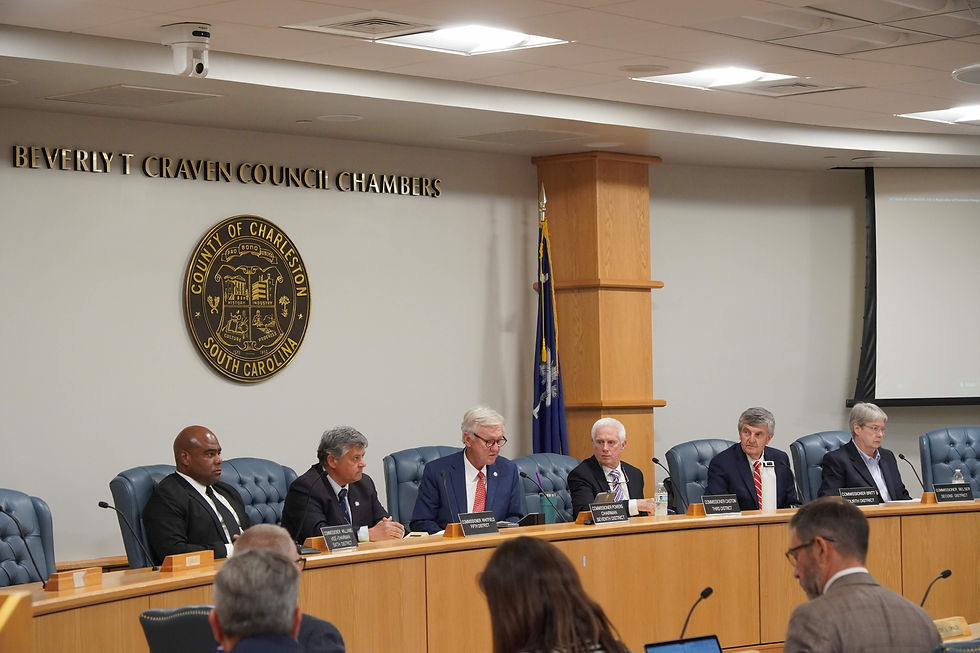
South Carolina’s consumer agencies have already identified protections missing from the company’s offer.
In October 28 testimony, Office of Regulatory Staff chief operating officer Dawn Hipp recommended four years of shareholder funded residential credits. She also sought a requirement that South Carolina receive comparable benefits when the companies make better commitments elsewhere. Hipp reported that the companies had not agreed to that provision.
ORS also recommended limits on the shareholder equity used to calculate future rates and competitive bidding protections for major generation projects. The commission has yet to decide which recommendations it will adopt. Hipp testimony
Consumer Affairs witness Lane Kollen addressed another route by which costs could reach local bills: expenses assigned to South Carolina by the larger company. His recommendations include restrictions on shared costs, exclusions for Virginia commitments and continued protection of the South Carolina gas business. Kollen testimony
Virginia’s demands show how much more regulators can seek.
Governor Abigail Spanberger has called for a six year freeze on residential base rates and larger credits lasting four years. Attorney General Jay Jones has opposed the transaction. Virginia commission staff recommended rejection unless extensive conditions were met. Governor’s demands, Attorney General’s position, Staff recommendation
The companies have answered with additional Virginia commitments involving Richmond investment, 600 NextEra jobs, 400 supplier jobs and up to $5 billion in procurement. Every added commitment makes it more important to establish which expenses South Carolina customers will be barred from paying. Companies’ November 3 announcement
The companies’ November 2 filing also shows where they resist stronger restrictions.
They oppose a broad base rate moratorium and propose financial safeguards that would become fully operative in stages.
The companies propose moving the utility into a separate legal entity if NextEra’s credit rating falls far enough—a step intended to protect the utility from its parent company’s financial trouble. But the filing gives two different rules for when that protection would take effect. One section requires downgrades by at least two credit-rating agencies. Another says a downgrade by just one agency would be enough.
The companies also propose a five member utility board with two independent directors. Virginia staff sought seven members with four independent directors—a majority able to act independently.
These details determine who has power when the company faces financial pressure.
South Carolina should require protections that are in force when control changes hands, with clear rules governing costs, borrowing and the movement of money out of the local utility.
The people deciding the deal
South Carolina is considering the merger under a utility system its legislature recently changed.
The Energy Security Act, passed in 2025 as H 3309, created an optional process for annual electric rate adjustments between periodic general rate cases.
The reason this matters is because the merger’s financial consequences would continue through later decisions about construction, financing and customer charges. Enacted law
Utilities pay for construction with borrowed money and money from shareholders.
Customers’ bills cover the interest on the loans and an approved return on the shareholders’ investment. Because that shareholder return generally costs more than borrowing, using a larger share of shareholder money can mean higher bills.
ORS wants to limit the shareholder portion used to calculate rates to 55 percent. That would limit how much of this more expensive financing customers must support, whether Dominion seeks an increase through a full rate case or the newer annual adjustment process.ORS testimony
The public’s ability to examine those expenses has already met a barrier.
On October 14, the PSC denied intervenors’ request to compel production of certain financial models and forecasts. It accepted trade secret claims and granted protective relief after finding that the required need for the material had not been established. Commission directive
Before deciding the merger, commissioners need to explain how the public can check the companies’ promises of savings when the financial models behind them remain confidential.
South Carolina’s utilities spend heavily on lobbying and campaign contributions.
Customers need to see how regulators are putting their interests first.
Dominion’s South Carolina disclosure reported $489,299.96 in payments to lobbyists in 2025. A separate PAC report showed $80,000 combined to four legislative caucuses early that year. Those are separate forms of spending, both directed at a political system that shapes utility regulation. Lobbying disclosure, PAC disclosure
NextEra spends money nationally as well. The Energy and Policy Institute reported $4.26 million from NextEra entities to seven political organizations in 2026, including a $2.5 million FPL contribution to the Republican Governors Association in September. Political spending analysis
South Carolina lawmakers should be judged by the protections they secure from companies with that kind of financial reach.
Speaker Murrell Smith has requested information in the merger proceeding, including records from other jurisdictions and underlying spreadsheets. Sen. Tom Young has called for independent review and customer protections while reserving judgment on the deal. Their next decisions will show what they intend to do with the information they receive. Smith’s requests, Young’s letter
South Carolina lawmakers have demanded that NextEra open its books before. During the fight over selling Santee Cooper, senators from both parties backed a bill to require the company to disclose its records. NextEra withdrew its purchase offer in April 2021.
The bill never became law, but the dispute offers a lesson for today’s lawmakers: demand access to the company’s records before agreeing to hand it control of another utility. Records legislation
Its political conduct elsewhere gives lawmakers further reason to insist on answers.
NextEra’s political conduct is already part of Virginia’s merger review. In Florida’s 2020 elections, consultants recruited “ghost candidates” to draw votes away from Democrats. One shared a surname with state senator José Javier Rodríguez, who lost by 32 votes. Investors accuse NextEra of helping finance and organize the scheme. The company denies wrongdoing.
Virginia regulators sought records about those activities, including a consultant’s memo to former NextEra chief executive James Robo. The companies secured restrictions keeping it out of public view. Florida scandal reporting
Investors also allege NextEra misled them about the scandal’s risks, inflating its stock price. A proposed $150 million settlement awaited court approval as of November 4. NextEra said insurance would cover the payment.
In Oklahoma, the dispute concerns customers’ costs during the February 2021 winter storm. Attorney General Gentner Drummond announced that a judge found NextEra Energy Marketing liable for charging excessive natural gas prices during the emergency. Damages remained to be decided. Oklahoma attorney general’s announcement
What customers can demand now

Rep. Robert T. Reese (D) is urging residents to testify and press lawmakers to take up the merger.
Asked about the Energy Security Act, Reese said, “The energy companies crafted that bill. They gave themselves carte blanche authority to be able to then go at the ratepayers.”
His legislative work offers a place to start. H 5283 would create a Utility Citizens Council to give consumers representation and a formal role in utility proceedings.
H 5282 would require commission approval for specified billing and payment changes and strengthen public notice and reporting.
Both proposals were introduced in 2026 and referred to committee. Neither has become law. Citizens council proposal, Billing protections proposal
Reese was one of 13 House members who voted against the Gatch amendment, a package of changes to the Energy Security Act. It included a provision allowing certain energy project permits to be approved automatically if an agency failed to act within six months. It also removed proposed requirements to notify landowners and hold public meetings about projects that could take their property through eminent domain. The House adopted the amendment 88–13 on May 1, 2025. House voting record
The November 2026 election weakened Republican control of the South Carolina House. Democrats flipped 10 Republican-held seats, ending the GOP’s supermajority.
Republicans still hold a majority, but with fewer votes to spare. That gives Democrats more room to press for consumer protections and challenge utility legislation.
The PSC will decide the merger, but lawmakers can demand public answers and push for stronger conditions before approval. CUBN’s election reporting
Customers have an immediate opening to put their demands before commissioners.
The November 12 hearing begins at 6 p.m. at 4045 Bridgeview Drive in North Charleston. Another hearing follows November 17 in Columbia.
The commission will also hear customers December 8, with a virtual option.
Registration information is available through the PSC at communications@psc.sc.gov or 803-896-4120. Official hearing information
Those hearings should force a concrete comparison: what would South Carolina households pay under the merger, and what would they pay if Dominion remained independent?
For a household choosing which overdue expense to pay, the difference between a credit and a lasting reduction in costs is not an accounting detail. It determines whether the money is still there for groceries, rent or medicine.
Ketchum has told investors what he expects the combined company to earn. South Carolina’s commissioners owe customers an equally clear accounting of what they would receive—and what they would be required to carry.
The company wants lasting control. It should have to demonstrate lasting benefits before South Carolina gives it permission.

Javar Juarez is Publisher and Editor-in-Chief of the Columbia Urban Broadcast Network (CUBN), an independent investigative news outlet based in Columbia, South Carolina, and a member of the South Carolina Press Association.