NAACP: Reviving the Community One Brick at a Time — Faith, Public Safety and Accountability Take Center Stage


Columbia NAACP brings faith leaders, lawmakers and public safety officials together to address community concerns and turn civic engagement into action.
COLUMBIA, S.C. — November 20, 2026 — The Columbia Branch of the NAACP brought together religious leaders, elected officials, law enforcement and community advocates Friday at the Eau Claire Print Building for its "Revival of the Vote" gathering.
Led by NAACP President Oveta Glover, the meeting focused on legislative accountability, rising living costs, public safety, voter participation and the role of churches in strengthening communities.

Elder Rosalyn Coleman of the African Methodist Episcopal Church opened the program with a direct message: "Less talk and more action." She encouraged participants to put collective responsibility ahead of individual interests and remain consistent in their community work.
Glover reinforced that message, urging churches to use their influence to educate residents, organize communities and hold elected officials accountable beyond election season.
Lawmakers Call for Greater Community Engagement

State Representative Robert Reese challenged churches, fraternities, sororities and civic organizations to arrive at the State House with clear legislative agendas.
Reese recalled seeing residents pack a legislative hearing concerning reptiles while discussions about energy costs, insurance reform and homestead exemptions attracted far less public participation.
"The second thing is you need to show up with an agenda," Reese said.
He also raised concerns about the proposed NextEra–Dominion transaction and the possibility of residential customers paying higher electricity costs to support expanding data centers and industrial development.
Reese urged residents to participate in the Public Service Commission's remaining December 8 hearing.
State Representative Leon Howard followed with a personal account of how his experiences with law enforcement, education, and his mother’s death shaped his public service and helped him discover his purpose.
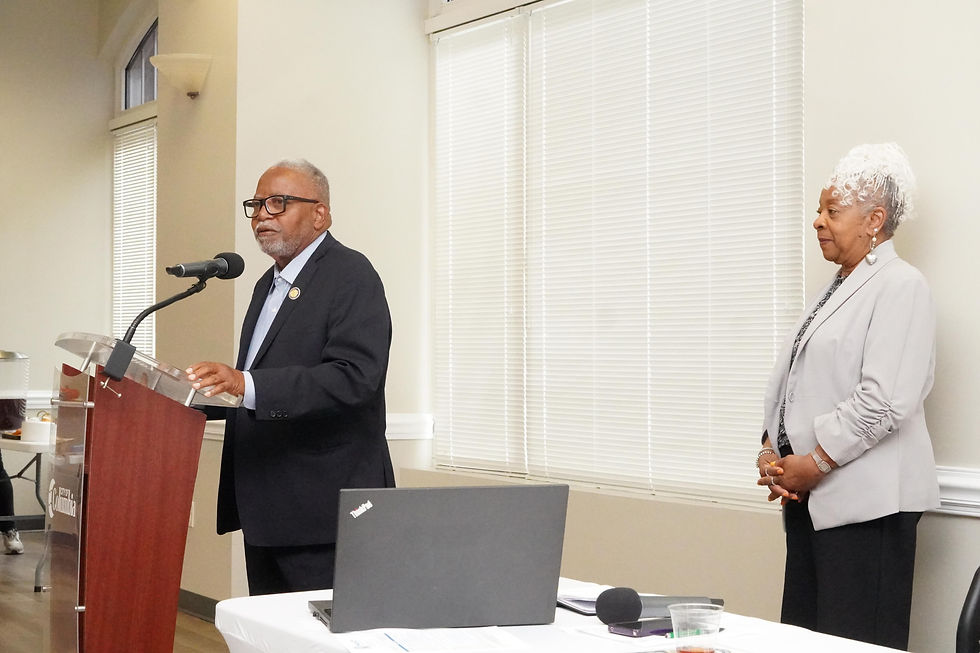
Howard emphasized the importance of relationships, legislative experience and delivering results. He pointed to millions of dollars invested in community centers and housing rehabilitation, including approximately $10 million in Belvedere and another $10 million allocated for Greenview.
"Find your why," Howard told participants, encouraging residents to turn personal experiences into meaningful community service.
Rev. Dr. Henry Cleare addressed the importance of prayer and never ceasing, encouraging churches to support community leaders and elected officials through consistent spiritual engagement.
Sheriff Lott Raises Concerns About Staffing and Growth

Richland County Sheriff Leon Lott, Columbia Police Chief Skip Holbrook and Columbia Fire Chief Aubrey Jenkins discussed public safety, youth violence and cooperation among their agencies.
During the discussion, CUBN questioned Lott about whether Richland County is adequately preparing for population growth, particularly in the Broad River District and Bluff Road, where deputies cover a large geographic area.
"I asked for 21 additional deputies in the last budget cycle. I got zero," Lott responded.
The sheriff said he plans to request another 21 deputies in the upcoming budget cycle.
He also expressed concern that a new substation on Bluff Road is being developed without additional deputies to staff it.
Police Chief Addresses Gun Violence and Youth Intervention

Columbia Police Chief Skip Holbrook reported that 72 people had been shot during the year, with approximately 90% of those victims being African American men.
Holbrook discussed Operation Ceasefire and juvenile intervention programs designed to reach individuals at risk of becoming involved in violent crime.
He also highlighted the Handle With Care initiative, which alerts schools when students have experienced traumatic incidents so educators can provide support rather than immediately resorting to discipline.
Lott addressed concerns about students bringing weapons to school and supported giving school officials more flexibility in certain disciplinary decisions.
Fire Chief Aubrey Jenkins emphasized the importance of cooperation among public safety agencies and his personal commitment to the communities where he grew up.
A member of the community also raised concerns about funding gun buyback programs. Lott explained that churches could partner with law enforcement to organize voluntary firearm turn-in events without necessarily offering cash incentives.
Young Minister Challenges NAACP to Engage the Next
Generation

Rev. Ricardo Herriott, pastor of Bailey Bethel AME Church in McCormick and former president of the Allen University NAACP campus chapter, challenged the organization to bring more young adults into community leadership.
Herriott proposed a 90-day action plan focused on personal outreach, shared responsibilities and public reporting of results.
His proposal called for conversations with younger residents, meetings to identify their concerns and a public report-back led in part by young adult co-chairs.
He also challenged churches and civic organizations to move beyond membership numbers and develop people willing to participate in the work.
Moving From Meetings to Action

The Columbia Branch of the NAACP created a space for meaningful dialogue, bringing residents and elected leaders together to find common ground, address concerns and work toward solutions.
This is the heavy lifting of community building: working through differences in opinions and beliefs while remaining focused on the common good, especially when so much is at stake for our youth and young adults.
Glover announced plans to continue hosting legislative and public safety sessions, encouraging faith leaders to share information with their congregations and bring more residents into the process.
The challenge now is turning those conversations into action. For the Columbia Branch of the NAACP, progress will be measured by stronger civic participation, greater public accountability and visible improvements in the communities it serves.


