“Protect the Children After They’re Born”: Sen. Margie Bright Matthews Introduces New Bill Amid South Carolina’s Measles Emergency

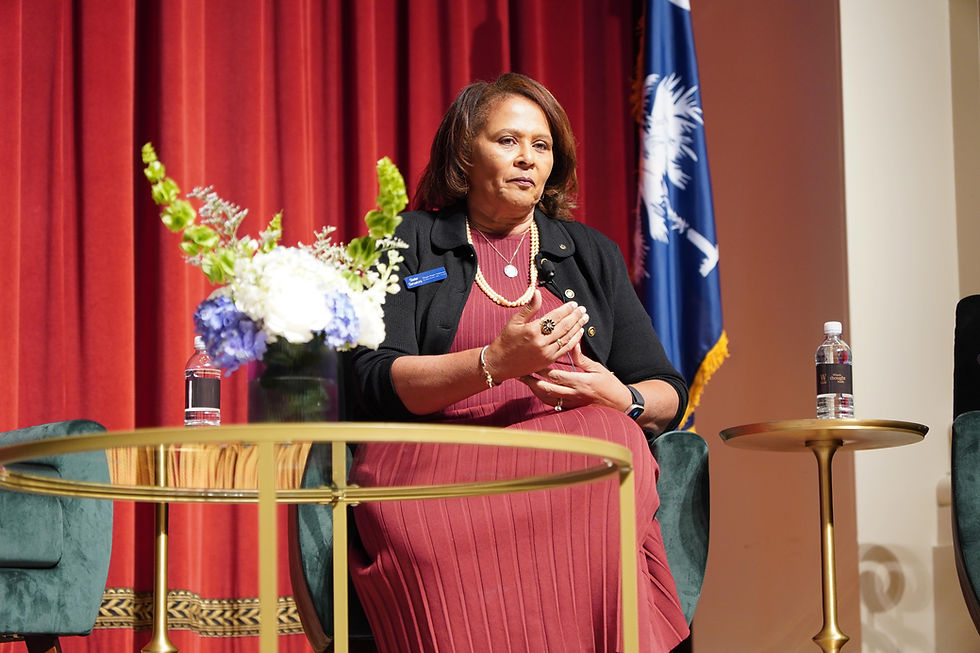
By Javar Juarez | CUBNSC | Exclusive Interview
South Carolina is now facing a public health crisis that lawmakers can no longer ignore.
With measles spreading across the state and public anxiety rising, Senator Margie Bright Matthews has introduced legislation aimed at closing one of the most controversial loopholes in South Carolina’s vaccination policy: the religious exemption.
Her bill, S.897, would remove the religious exemption for the MMR vaccine (measles, mumps, rubella) for children attending public schools, and it would tighten vaccination requirements for students attending schools tied to scholarship and education programs.
In a direct and emotional interview with CUBNSC Matthews did not mince words about what she sees as the state’s most dangerous contradiction: lawmakers who claim to fight for children before birth, but refuse to take meaningful steps to protect them once they are alive.
“I sit in a chamber with men who say that they care about children? You say you care about the pre-born. Let’s talk about the ones that are already born.”
Matthews’ message comes as South Carolina continues to grapple with measles outbreaks that public health experts warn are not only preventable, but likely to grow worse if lawmakers remain silent.
Measles in South Carolina: What S.897 Would Do
Senator Matthews’ bill would:
Suspend South Carolina’s religious exemption for MMR vaccination in public schools
Require students participating in certain education scholarship programs to meet MMR vaccination requirements (or qualify for a medical exemption)
Require two doses of MMR for attendance at a public institution of higher learning
Matthews’ reasoning is simple: measles is not a mild childhood inconvenience. It is an airborne virus capable of devastating children, immunocompromised residents, and infants who are too young to be fully vaccinated.
And she says lawmakers have waited too long to treat it like the emergency it is.
“South Carolina leads the nation in measles. To me, that means we’re leading the nation in not protecting our children.”
A Disease That Doesn’t Respect Politics — Or County Lines
Measles is not confined to one region.
While outbreaks have been heavily discussed in the Upstate, Matthews warns that South Carolina’s failure to act is now putting other states at risk as well.
In the interview, it is noted that the spread has extended beyond South Carolina and into North Carolina, including areas connected by major travel and commerce corridors.
This matters because measles is one of the most contagious viruses known. It spreads through coughing, sneezing, and even lingering airborne particles. That means a person can leave a room and still infect others afterward.
Measles does not care whether a family is Democrat or Republican. It does not care about ideology. And it does not stop at county borders.
“It’s Not a Rash.” It’s a Lifetime of Damage
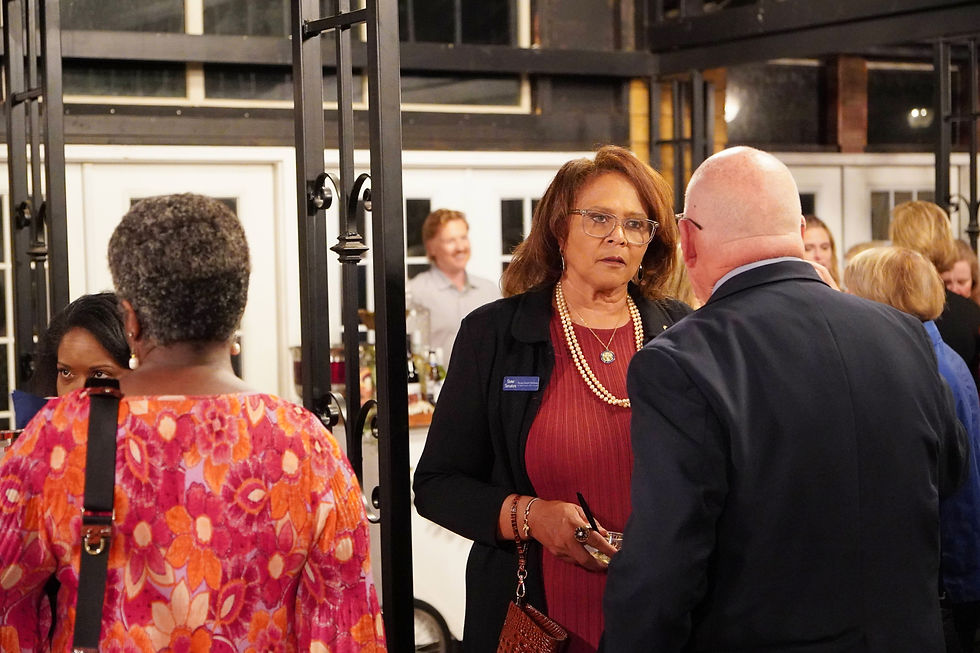
Senator Matthews emphasized what many South Carolinians still do not understand: measles is not simply a rash and fever.
“We’ve got to do something. We just can’t sit here and not make people aware of the harmful effects of measles. It’s not a rash.”
Measles can cause:
pneumonia
severe dehydration
permanent hearing loss
brain swelling (encephalitis)
long-term cognitive complications
blindness
death
It can also cause a dangerous immune-system phenomenon sometimes described as “immune amnesia,” where a child’s immune system becomes less able to fight other infections for months or even years after recovery.
For children who survive, the price can still be lifelong.
That is why Matthews says the debate over exemptions is not abstract. It is not academic. It is not a political game.
It is a question of whether South Carolina is willing to accept preventable child suffering as collateral damage for ideological posturing.
Community Health Workers Sound the Alarm in Spartanburg County

The alarm is not only coming from lawmakers.
On the ground, community health workers say the situation is urgent and worsening.
Angie Edwards, a Community Health Worker who has continued serving in some of the hardest-hit areas, including rural Spartanburg County communities like Inman, says the threat is not theoretical. It is present, active, and spreading. She described the work being done alongside the Spartanburg Public Health Department as intense, fast-moving, and at times overwhelming as health workers race to help the public understand what is at stake, especially for the most vulnerable.
“It’s scary,” Edwards said. “We lost a lot of people to COVID-19, and we know the toll that COVID is still having on the working class and poor.”
Edwards also pointed to a reality in Spartanburg County that deepens the danger: many older adults are raising young children, particularly in under-resourced parts of the Upstate.
“You have two vulnerable populations living together,” she said. “That is a recipe for disaster.”
Religious Exemptions and the Public School Problem

One of the most politically sensitive parts of S.897 is its removal of the religious exemption.
Matthews addressed that head-on.
“What my bill says is that it suspends your ability to use the religious exemption.”
She argues that if families refuse vaccination, they should not be allowed to put other children at risk inside public schools.
“If you choose that for your child… your child then stays home. But we need to keep these other children safe.”
She also bluntly stated a point that many lawmakers avoid saying publicly: that not all exemptions are sincere.
“You and I both know all of those exemptions are not real, right? Some people just do so.”
In other words: South Carolina’s exemption system is being used not only for faith reasons, but as a loophole for political resistance to vaccination.
And the result is a state where children with medical vulnerabilities — including those who cannot be vaccinated — are forced to share classrooms with unvaccinated peers in the middle of a growing outbreak.
A Mother. A Grandmother. A Lawmaker Watching the State Fail Children
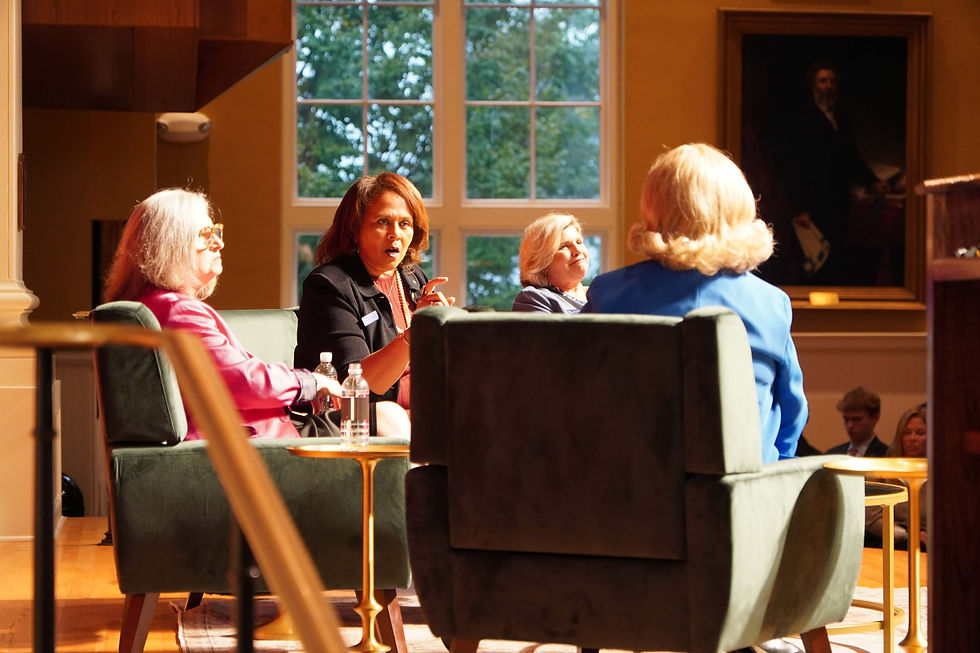
Matthews’ advocacy is not theoretical.
She is a mother of four and a grandmother of four, including an infant grandchild.
“I have four grandchildren… The youngest is six months.”
That matters, because infants are among the most vulnerable groups when measles spreads.
They cannot “debate” their way out of exposure. They cannot choose their school district. They cannot choose whether adults around them believe in vaccines.
They rely on the choices made by lawmakers and communities.
And Matthews is clear: South Carolina is failing them.
A Senate Colleagues Problem: “They Left Me Hanging”
Perhaps the most politically explosive part of the interview was Matthews’ revelation that she introduced the bill without meaningful support from her own caucus.
“I see members of my own caucus jump up and add their names to other bills all the time… I didn’t see any of my caucus members stand up and say, ‘I want to be added as a co-sponsor.’ No. They left me hanging out there by myself.”
In a legislature known for intense partisanship, Matthews is not merely challenging Republicans. She is challenging every lawmaker who has stayed silent while measles spreads.
And she is inviting her colleagues to stop hiding behind politics and start doing the work.
“If you don’t like the way my bill is crafted, come to the table and work with me. But let’s solve the problem… because one child that dies… is one too many.”
The Moral Crisis: Forced Birth, Then Abandonment
This is the heart of the story.
Matthews is not only introducing a vaccination bill. She is exposing what she sees as a moral crisis in South Carolina governance: the obsession with controlling women’s bodies, paired with a refusal to invest in children’s survival afterward.
“How can we sit in that chamber… and not make any steps to do anything for these children… We say we want people to have — I need them to start protecting the children after the children are born.”
That statement will resonate far beyond the measles debate.
It places S.897 in the larger reality South Carolina families are living through:
maternal mortality disparities
infant mortality disparities
hospital closures and rural healthcare collapse
medical debt
lack of paid leave
underfunded public schools
and now, a preventable disease spreading through communities
The question Matthews is forcing lawmakers to answer is simple:
If you claim to protect life, why won’t you protect children from measles?
What Happens Next
S.897 is now a test.
Not just for the South Carolina Senate. But for the political integrity of the entire state.
Matthews says she is not demanding perfection. She is demanding movement.
“You can rewrite it, you can change it, but I need the needle to move in South Carolina.”
And as measles spreads, that needle needs to move fast.
Because in a state that claims to love children, a preventable outbreak should never be the thing that finally forces lawmakers to prove it.


