“They Should Not Be Living in Fear”: Waters Backs Senior Tax Relief as S.C. Lawmakers Return


North Charleston Democrat says the overdue budget is about more than tax policy, with delayed funding touching state workers, teachers, health care, food assistance and local projects.
By Javar Juarez | New Progressive Journal Legislative Feature| August 10, 2026.
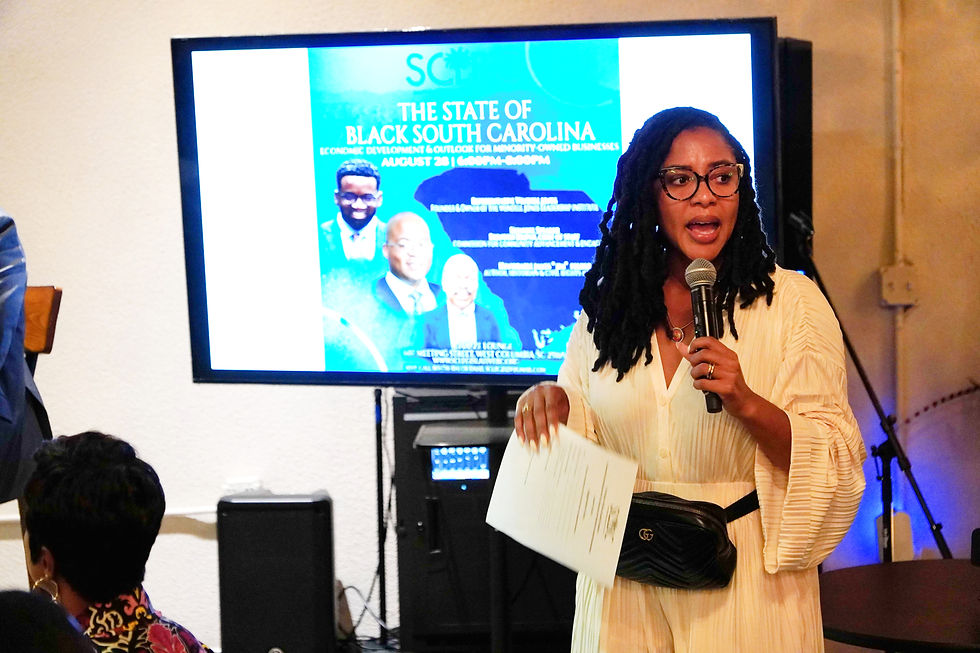
COLUMBIA, S.C. — One day before South Carolina lawmakers return to Columbia to consider the state’s overdue budget, Rep. Courtney Waters said the debate over senior property-tax relief cannot be separated from a larger question: Who should feel the benefit when state government has money to spend?
For Waters, a North Charleston Democrat representing House District 113, the proposed expansion of the Homestead Exemption is both necessary and deeply personal.
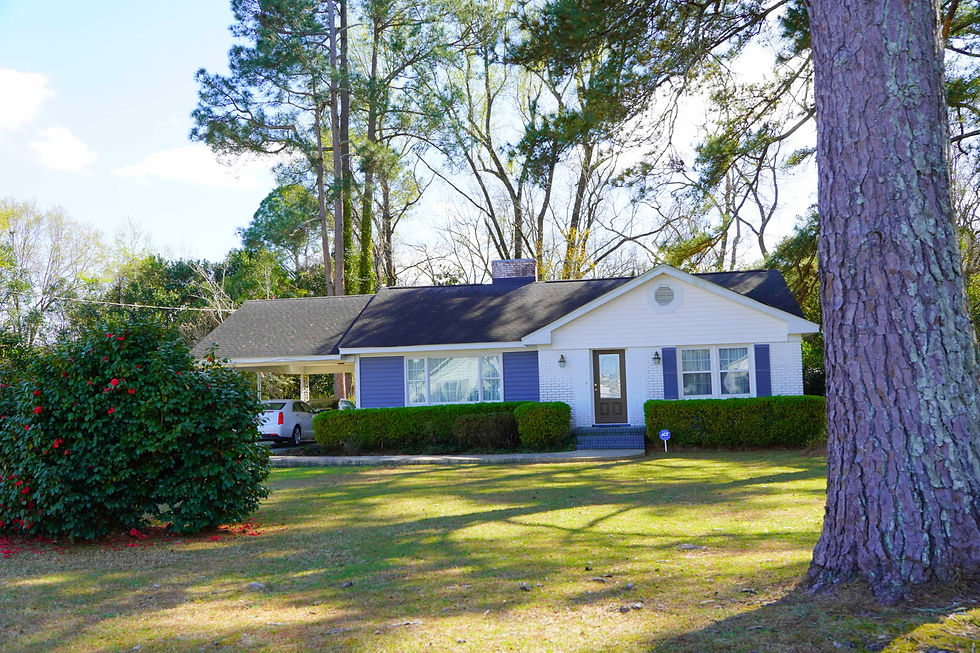
“Everybody wants better property-tax relief for seniors because they’ve paid their dues,” Waters told The New Progressive Journal on Monday. “They’ve earned it, and they should not be living in fear of whether they’ll be able to stay in their home as all of this development that we love occurs.”
The compromise awaiting lawmakers would increase the amount of a qualifying home’s value exempt from property taxes from $50,000 to $75,000. Senate negotiators had pushed for relief reaching as high as $150,000, depending on residency.
Although the final number is smaller, Waters said even modest relief could matter to seniors confronting rising home values, repair bills, insurance costs and the general pressure of living on a fixed income.
“There’s no reason that someone who has worked and toiled over their lifetime should suddenly hit 65 and realize, ‘Oh my gosh, I’ve got to go back to work just to afford my house again that I already paid for,’” she said.
Waters recalled meeting a woman while canvassing in North Charleston whose modest home sat near Interstate 526. The woman was not living on prime waterfront property or in one of the Low country’s luxury developments. Still, her property taxes continued to climb.
“She was like, ‘Can you please do something about my property taxes? They’re going up,’” Waters recalled. “This woman is in a very modest house in a community that most would not say is desirable.”
The homeowner already qualified for the existing exemption but needed more help.
“People are waiting for just anything that’s going to give them an opportunity to breathe,” Waters said.
A budget operating on last year’s numbers
South Carolina entered the new fiscal year July 1 without a completed spending plan. State government has continued operating under a resolution that maintains most funding at the previous year’s levels.
That has prevented a government shutdown, but Waters said maintaining last year’s spending does not account for inflation, population growth or newly identified needs.
“Our state agencies are operating according to a continuing resolution, which means they’re at last year’s levels,” she said. “We have not accounted for inflation. We also have not accounted for, strategically, what they said needed to happen over this next year if South Carolina was going to be good.”
The unresolved budget includes funding connected to new federal requirements for administering the Supplemental Nutrition Assistance Program, commonly known as SNAP. It also contains money needed to maintain Medicaid reimbursement rates, expand early-childhood education and implement teacher raises.
Waters warned that without adequate funding, health care providers could be forced to reconsider their services or absorb rising costs while receiving reimbursements based on an outdated budget.
“Doctors would not be able to get reimbursements under Medicaid at the current rate,” she said. “They’d have to either adjust their services, adjust their rates or adjust their care to patients.”
The budget would also raise the minimum starting salary for teachers to $50,500. Because the new plan has not taken effect, those increases have remained in limbo.
For Waters, who began her career as a teacher and later served four years on the Charleston County School Board, those consequences show why the budget cannot be reduced to a fight over isolated line items.
“We really could have done all”
The two issues that dominated negotiations were the Homestead Exemption and hundreds of millions of dollars in legislator-requested local projects. Critics call those projects earmarks. Waters calls them community investment funds.
Publicly, the debate was often framed as a choice: Lawmakers could provide additional tax relief to seniors, or they could fund projects requested by communities.
Waters rejected that framing.
“There was this argument of, ‘There’s no money to do the Homestead Exemption, and there’s no money to do earmarks.’ I don’t believe that’s true,” she said.
She acknowledged that she could not speak with absolute certainty about every conversation between House and Senate negotiators. However, she said she believed the spending plan could have accommodated both priorities.
“There’s also this idea that we can only do for seniors, or we can do for community,” Waters said. “But we really could have done all. It’s a matter of priority.”
That question of priorities, she argued, extends beyond the current budget. It reflects a deeper philosophical divide between lawmakers who emphasize maintaining reserves and reducing taxes and those who want state revenue directed more aggressively toward public services.
“Is your priority getting the state’s money — your money — to the social programs and municipal programs that are necessary so that you can see a positive benefit in your life?” Waters asked. “Or do you want people preserving the purse and dumping more and more money into reserves for whatever disaster may never come?”
Waters, a member of the House’s small Democratic minority, described governing across ideological lines as difficult but unavoidable.
“We read the same information and come away with totally different perspectives,” she said. “It’s like how we all read the Bible, but we just seem to come away with a totally different orientation.”
Still, she said lawmakers have to find ways to work together, “even if in the back of your mind you’re going, ‘This is absolutely ridiculous.’”
Waters was particularly critical of the income-tax reduction enacted earlier this year, which she voted against.
“If you ask that person, ‘Would you rather get $200 back on your state income tax, or would you rather be able to drive your grandmother a reasonable distance to a hospital?’ they’d probably say, ‘I want my grandma to be able to see a hospital,’” she said. “The value is not the same.”
Honoring the state’s Scout Motors commitments
Lawmakers have also wrestled with a $150 million request connected to cost overruns at the Scout Motors development in Richland County.
Waters was careful to acknowledge that she was not part of the earliest negotiations and did not know every detail behind the additional costs. But she said South Carolina must recognize the economic consequences of failing to honor commitments made when recruiting a major employer.
“When a state makes a commitment, it needs to follow through on it because these businesses don’t have to stay here,” she said.
Before entering the Legislature, Waters worked in the automotive supply-chain industry. She said she witnessed how manufacturing plants can transform the prospects of workers willing to travel long distances for stable, well-paying employment.
“This is a space where Democrats and Republicans don’t differ,” she said. “We want our people to have great jobs. We do want companies to come and for people to get great jobs.”
But meeting the state’s obligations should not mean writing checks without stronger expectations, Waters said. She would have preferred a community benefits agreement spelling out local hiring, contracting and educational commitments.
“The state should be making sure that our citizens, our children and our families are getting something when these companies come in,” she said.
That could include requirements for companies to hire South Carolinians, work with businesses reflecting the state’s diversity and invest in nearby schools and workforce programs.
“Everybody’s not getting a job at that plant,” Waters said. “So we need to do the other things.”
Who decides which communities receive funding?

Under the compromise, individual community investment requests will be removed from the main budget. A separate legislative committee is expected to review the projects and determine which ones receive funding.
That unresolved process is one of Waters’ greatest concerns heading into Tuesday’s session.
“We have no idea what will now be the basis of them deciding what gets funded and what doesn’t,” she said. “We have no idea who’s on this committee yet.”
Waters said lawmakers could be asked to receive new information, assess the consequences and vote in real time.
“That is very concerning,” she said. “Now we just have no idea what’s going to be funded and what won’t.”
Her requests included support for an organization providing summer Freedom School programming, parent advocacy and community information. She also supported funding for a North Charleston park serving a community without the resources to complete the work on its own.
Other lawmakers sought money for roads, drainage, sewer systems, tourism efforts and municipal projects, particularly in rural areas with limited local tax bases.
“If you needed a road, or you had a sewage or drainage issue, and you tried to get that funded and it got through, now you’re kind of sitting and waiting to see if your program is going to pass muster,” Waters said.
She worries some districts could leave the new process with nothing.
“We are not set up for success”

Waters also offered an unusually candid assessment of what it is like to serve in the South Carolina House.
She said rank-and-file legislators are expected to review large volumes of legislation, attend overlapping committee meetings, respond to constituents and monitor policy developments without the professional staff available to legislators in many other states.
“I think we are set up like this in South Carolina intentionally not to work well,” she said.
Waters noted that legislators receive a base salary of $10,400 annually and generally do not have personal legislative staff briefing them on bills and agency decisions.
“We need help,” she said. “What I’m learning is we are not set up for success. We have got to pay very close attention, and when we have information, even if it’s not perfect, we have to give it to people.”
That includes being willing to admit what she does not know, she said.
“I’m very comfortable saying, ‘I don’t know everything, and I’m giving you the information that I have,’” Waters said. “It’s an exercise in managing expectations, trying to do a lot with a little.”
As lawmakers prepare to return, Waters said the public should pay attention not only to whether the budget passes, but also to who receives relief, who controls the local-project process and whether state spending produces visible improvements in people’s lives.
For seniors worried about remaining in their homes, she said, the debate is not abstract.
“They’ve worked and toiled over their lifetime,” Waters said. “They should not suddenly hit 65 and realize they have to go back to work just to afford their house again.”

Javar Juarez is Publisher and Editor-in-Chief of the Columbia Urban Broadcast Network (CUBN), an independent investigative news outlet based in Columbia, South Carolina, and a member of the South Carolina Press Association. He is also President of the Capital City Chapter of the A. Philip Randolph Institute.


