Scout Motors Plants Its Flag in Blythewood with Workforce-First Training Center

By Javar Juarez | CUBNSC
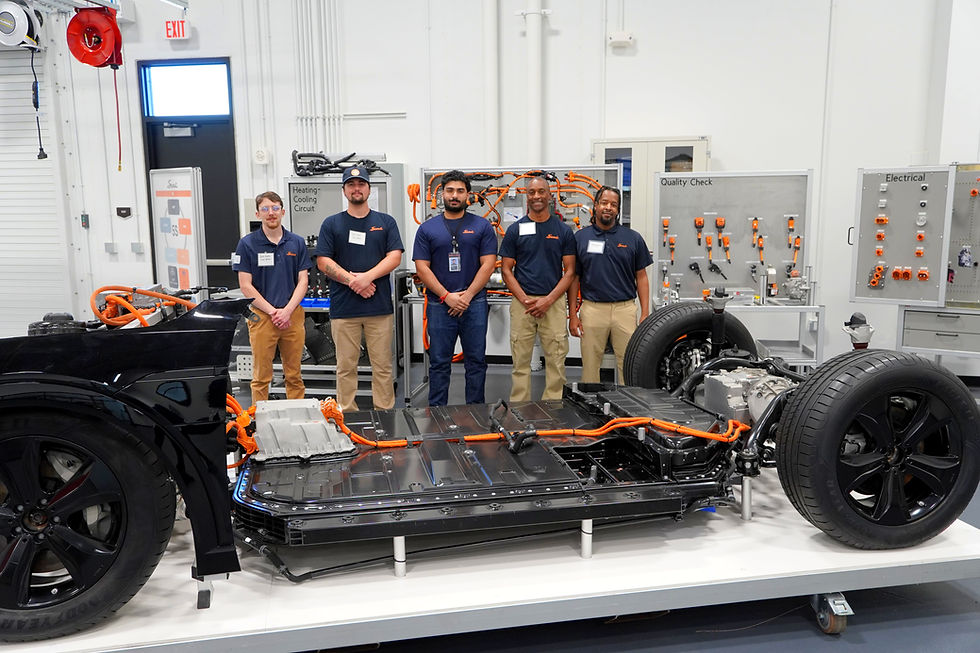
BLYTHEWOOD, S.C. — On a day that felt more like a turning point than a ribbon cutting, Scout Motors unveiled its fully completed training center in Richland County, signaling what may become one of the most consequential workforce investments South Carolina has seen in a generation.
The room was packed. State leaders, local officials, educators, and community stakeholders filled the facility, representing a rare alignment across city, county, and state lines. From Richland County Council to representatives from Columbia, Blythewood, and Fairfield County, the message was clear. This was not just another announcement. It was the beginning of something larger.
At the center of it all stood a simple but powerful idea. Before there are vehicles, before there is production, before there is economic impact, there must be people prepared to do the work.

Scout Motors President and CEO Scott Keogh made that point unmistakably clear.
“If you don’t have a motivated workforce, you don’t have a factory. If you don’t have a factory, you don’t have a car. If you don’t have a car, you don’t have a company,” Keogh said, framing the training center as the company’s most important investment to date.
A Workforce Strategy Rooted in Opportunity

The training center, developed in partnership with readySC, the South Carolina Technical College System, and Midlands Technical College, is designed to do more than train workers. It is structured to remove barriers and create direct pathways into long-term careers.

Keogh emphasized that this is not theoretical workforce development. The training is aligned directly with the jobs workers will perform on the factory floor. Hands-on learning, problem-solving, and ownership are embedded into the process from day one.

The demand is already overwhelming. According to Scout Motors, more than 17,000 South Carolinians have expressed interest in working at the facility. The company expects to create more than 4,000 jobs, offering competitive wages, strong benefits, and access to childcare.
For a region long navigating the challenges of economic transition, the scale of that opportunity cannot be overstated.
South Carolina’s Competitive Edge

Governor Henry McMaster, addressing the crowd, pointed to what he believes continues to set South Carolina apart in the race for major industry investments.
“It is the people,” McMaster said. “South Carolina is a handshake state. I’d rather have your hand in mine and your word than a signed contract.”
He tied Scout Motors’ arrival to a broader legacy of manufacturing success in the state, referencing companies like BMW and Boeing. The formula, he argued, remains consistent. Strong workforce culture, technical training infrastructure, and a shared sense of purpose.
Congressman Joe Wilson echoed that sentiment, noting that the state’s economic development history has always been rooted in strategic partnerships and workforce readiness.

From Michelin to Boeing, Wilson framed Scout Motors as the next chapter in a long line of transformative investments. He highlighted the expected 4,000 jobs and emphasized the ripple effect across local industries and suppliers.
Training That Extends Beyond the Classroom

Dr. Tim Hardee, President of the South Carolina Technical College System, shifted the focus from infrastructure to impact.
“It’s easy to look at a building like this and see equipment and technology,” Hardee said. “What matters most is the people who walk through these doors.”
Hardee described the training center as a gateway to generational change. Workers who enter the program are not just gaining skills. They are gaining stability, confidence, and the ability to reshape their family’s future.
The model is intentional. Education feeds into training. Training feeds into employment. Employment feeds into long-term economic mobility.
It is a pipeline designed not just to fill jobs, but to sustain communities.
Real People, Real Transformation

That vision came to life through the voices of those already stepping into the opportunity.
Tashay Bates, a newly hired production associate, spoke candidly about the barriers she faced entering manufacturing.
“You need experience,” she said. “And when you don’t have experience, doors tend to stay closed.”
Scout Motors changed that equation.
Through the training program, Bates found not only employment, but purpose and structure. She described waking up each morning motivated, supported, and confident in her future. For her, the opportunity is not just professional. It is personal, allowing her to balance career growth with family life.

Gail Allen, another production associate with deep roots in Blythewood, shared a similar transformation. After years in a stable but familiar role at the Department of Motor Vehicles, she made the decision to step into something new.
“This isn’t just my next job,” Allen said. “It’s my last career.”
For Allen, the investment in her hometown carries emotional weight. She has watched the site rise from the ground and now sees herself as part of its future.
Building More Than Vehicles

Clarice Henderson, Vice President of Human Resources for Scout Motors, reinforced the company’s long-term vision.
“Great manufacturing starts with people,” Henderson said.
She emphasized that hiring is being done deliberately, ensuring each employee is equipped with the skills and support needed to succeed. The training center, she explained, is where company culture begins and where careers take shape.
As of the unveiling, Scout Motors has already hired more than 600 employees in South Carolina, with plans for steady and sustained growth in the months ahead.
A Defining Moment for the Midlands

What unfolded in Blythewood was more than a ceremonial opening. It was a statement about the future of American manufacturing and the role South Carolina intends to play in it.
Scout Motors is not simply building vehicles. It is building a workforce, a pipeline, and a model that prioritizes people as the foundation of economic success.
For Richland County and the broader Midlands, the implications are profound.
This is about jobs, yes. But it is also about dignity in work, stability for families, and the belief that opportunity should not be reserved for those who already have experience, but extended to those willing to learn.
If the promises made inside that training center hold true, Blythewood may soon be known not just as the home of a factory, but as the birthplace of a new generation of careers.