Dominion Energy Rate Hike Sparks Outcry as Residents Confront PSC in Charleston


By Javar Juarez | CUBNSC
CHARLESTON, S.C. — The South Carolina Public Service Commission began taking public testimony Tuesday on Dominion Energy South Carolina’s latest request to raise electric rates, opening yet another chapter in a now-familiar story for households already struggling to keep up with rising utility costs.
Dominion Energy South Carolina filed its newest rate hike application on January 2, 2026, asking regulators to approve an increase that would push a typical residential bill up by about $19.98 per month for customers using 1,000 kilowatt-hours.
The company says the filing is necessary to recover roughly $322 million tied to investments in its electric system, including grid upgrades, generation improvements, technology spending, and restoration work following Hurricane Helene.
But for many South Carolinians, the hearing in North Charleston is about much more than one new filing. It is about a pattern.

Over the last several years, Dominion has returned repeatedly to regulators seeking new revenue from ratepayers through fuel adjustments, base rate cases, and now another significant increase less than a year after the company secured a scaled-back but still costly settlement in its 2024 base rate case.
The result is a growing sense among customers that the meter is always running in one direction.
And the public frustration expressed at Tuesday’s hearing was not only about cost. It was also about power, representation, and fairness.
A Hearing Room Where the Public Speaks, but Does Not Control the Process

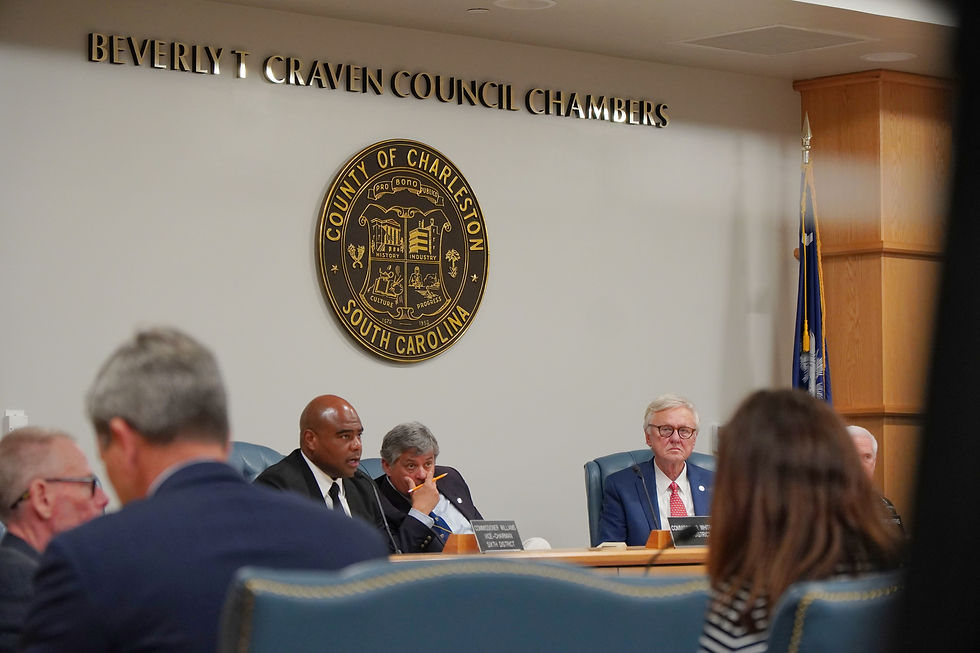
At the Charleston hearing, ordinary residents appeared before a quasi-judicial body, swore testimony under oath, and spoke in a setting shaped by lawyers, regulators, and utility officials. That structure has become part of the story itself.
For people like Anthony Bryant, who spoke forcefully about the imbalance he believes defines these proceedings, the problem is not simply that Dominion keeps asking for more money. It is that ordinary citizens are placed inside a legal framework they do not control, surrounded by attorneys and agencies that claim to protect the public while offering no individualized representation to the people taking the microphone.
That critique deserves serious attention.
South Carolina’s utility hearing process gives the public a voice, but not equal footing. Residents can testify.
They can describe hardship.
They can challenge the logic of repeated rate hikes.
But they are not the ones setting the terms of the proceeding, shaping the evidentiary record, or steering the legal arguments that will matter most once the hearing room empties and the case moves deeper into regulatory review.
That contradiction hung over Tuesday’s hearing.
Dominion’s 2026 Ask Is Large, but So Is the Pattern Behind It

Dominion says it is seeking the increase to support approximately $1.4 billion invested in its electric system since 2023. The company points to hurricane recovery, environmental controls, technology, system upgrades, and rising tax obligations as major drivers.
The requested increases vary by customer class. Commercial rates would rise 5.91%.
Industrial rates would increase 14.86%. Street lighting would jump 20.1%.
For residential customers, the number most likely to circulate publicly is the nearly $20 monthly increase tied to the sample 1,000-kWh bill. But that figure should not be mistaken for a universal cap.
As elder advocate Ms. Novella Smith Larkins reportedly pointed out, households with higher bills would likely face higher dollar increases if the proposal is approved.
The 12.73% figure attached to Dominion’s example means that the $19.98 number functions more as a benchmark than a ceiling. A family already paying $300 a month for electricity would not be looking at the same increase as a household whose bill sits much lower.
That distinction matters greatly in a state where some customers already report monthly power bills reaching into the high hundreds during periods of heavy usage.
That is why public officials and community leaders should resist repeating the “about $20” figure as though it tells the whole story.
It does not.
A Utility That Keeps Coming Back
Viewed in isolation, Dominion’s current filing is substantial. Viewed in context, it is part of a troubling rate hike history.
In 2021, a COVID-delayed case stemming from a 2020 filing sought an increase of roughly 7.7%, which would have added about $9.68 to a typical residential bill.
In April 2022, Dominion won approval for an annual fuel adjustment that raised residential bills about 5.19%, or $6.53 per month.
Then, in August 2022, the company filed a mid-period fuel adjustment that would have added roughly $18.55 more per month, nearly 14%, for residential customers using 1,000 kWh.
In April 2023, another increase was approved, raising the typical residential bill by about 3.91%, or $5.49 monthly.
Then came the 2024 general base rate case. Dominion initially sought an increase of roughly 14.21%. After settlement, regulators approved a lower but still painful outcome: an authorized $219 million base rate increase that ultimately translated into about $15.13 more per month for residential customers using 1,000 kWh.
Now, in 2026, the company is back again.
That means South Carolina customers have been forced to track repeated rate actions in 2020/21, 2022, 2023, 2024, and now 2026. What began as smaller fuel-related increases has grown into a broader and more entrenched pattern of returning to ratepayers for more money.
The obvious public question is this:
Why is Dominion back so soon after the 2024 settlement took effect? Keep Reading!
Consumer Representation Exists on Paper. The Public Still Feels Alone.

The South Carolina Department of Consumer Affairs has intervened to represent residential consumers. That matters. But in the hearing room, many residents still felt like they were standing alone.
That tension came through in testimony from Joe Hodap, who pointed out that 86% of Dominion’s revenue comes from residential customers, yet the company ultimately answers to shareholders and regulators. In his words, ratepayers appear to sit at the bottom of the priority list.
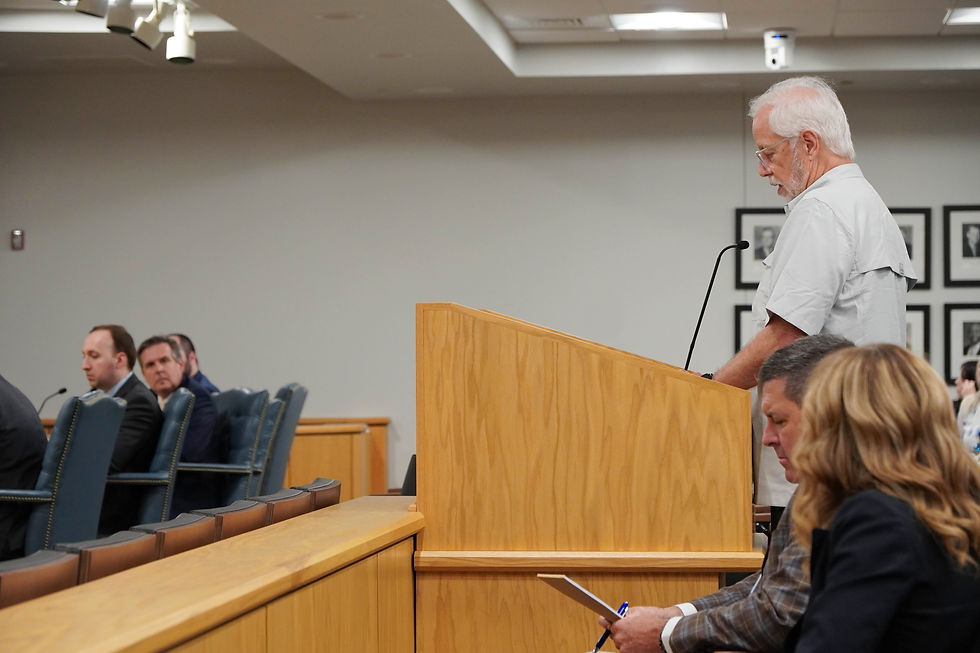
Hodap also questioned Dominion’s requested 10.5% return on equity, asking who determines that number and why the public is expected to absorb it. He raised concerns about data centers, warning that their massive energy demands could drive future costs that fall back on everyday customers.
Beyond cost, his frustration extended to access and transparency. Hodap described difficulty getting answers from Dominion about natural gas service in his own neighborhood and said there is little clear information available about who the Public Service Commission and Office of Regulatory Staff actually are to the public.
When he pressed those concerns, the chairman referred him to the PSC website and declined to answer questions directly.

That exchange captured the broader reality of the night: agencies exist to represent the public interest, but individual residents—sworn in and speaking under oath—do so without personal representation, clarity, or control of the process.
For many in the room, that gap is where trust begins to break.
The Corporate Structure Tells Its Own Story

The company appearing before South Carolina regulators is Dominion Energy South Carolina, but the corporate chain does not end in Columbia or Charleston. It runs to Richmond, Virginia, where parent company Dominion Energy, Inc. sits atop the structure.
That matters because DESC is a wholly owned subsidiary. Revenue approved by South Carolina regulators ultimately strengthens the balance sheet of a larger enterprise whose decision-making and executive compensation operate far above the local communities being told to absorb higher bills.
At the top of that enterprise is Robert M. Blue, the Chair, President, and CEO of Dominion Energy, Inc. Beneath him is Diane Leopold, Executive Vice President and Chief Operating Officer. In South Carolina, W. Keller Kissam, President of Dominion Energy South Carolina, is the executive whose name is most directly tied to the filing before the PSC.
For ratepayers, the central issue is not simply who holds which title. It is what those relationships mean when a subsidiary asks a state commission to extract more money from households already under strain.
Executive Pay Keeps Rising Even When Performance Falls Short
The compensation numbers heighten that tension.
According to Dominion’s proxy filings, CEO Robert Blue received compensation totaling about $16 million in the company’s most recent reporting cycle, including salary, stock awards, incentive pay, and other compensation. That represented a substantial year-over-year increase. Other senior executives also saw significant compensation gains.
At the same time, the company’s long-term incentive outcomes did not fully hit target levels. In plain language, executives missed important performance benchmarks and still saw major pay growth.
That is a deeply uncomfortable fact in a state where customers describe power bills as destabilizing household budgets, and where elderly residents, low-income families, and working-class households are being told that still more increases are necessary.
The issue is not whether a large utility has executives who make large salaries. The issue is whether the burden of constant system investment is being assigned downward to the public while the rewards of the corporate model continue to flow upward.
Act 41 Changed the Landscape, and Ratepayers Should Pay Attention
This hearing is also taking place in the shadow of a major new state law.
On May 12, 2025, Governor Henry McMaster signed the South Carolina Energy Security Act, also known as Act 41, into law. Supporters called it a once-in-a-generation effort to modernize energy policy for a rapidly growing state. Critics warned that it created a new framework that could make repeated rate increases more common.
At the center of those concerns is the law’s Electric Rate Stabilization mechanism.
In practical terms, it allows utilities to pursue more frequent prospective rate adjustments tied to capital spending rather than waiting years between major cases.
That change is directly relevant to what South Carolinians are witnessing now.
Dominion filed this January 2026 rate application less than a year after Act 41 became law. The company has also made clear that the current case does not include costs associated with the proposed Canadys natural gas project.
That means one of the largest potential future cost drivers is still out on the horizon.
In other words, the current hearing is not simply about one increase. It may be about the beginning of a more normalized cycle of serial cost recovery under a new legal structure.
The Ghost of V.C. Summer Still Haunts South Carolina
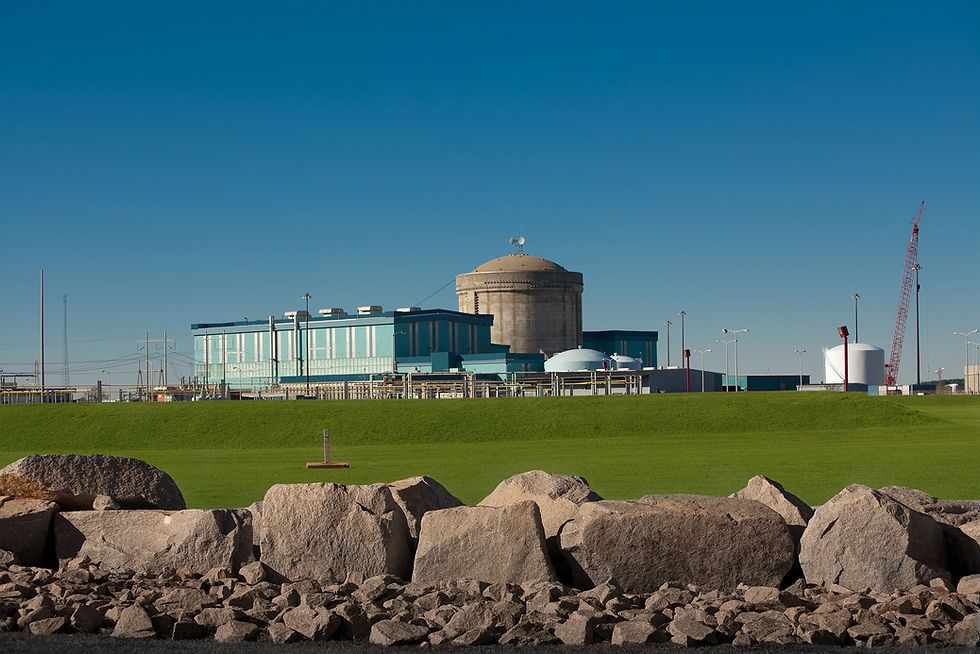
No serious conversation about energy regulation in South Carolina can ignore the cautionary tale of V.C. Summer.
The 2007 Base Load Review Act allowed utilities to recover costs from customers for nuclear construction that ultimately collapsed in one of the most disastrous public-private failures in modern South Carolina history. Ratepayers spent years funding a project that never delivered power.
That law was repealed in 2018 after the $9 billion V.C. Summer debacle became impossible to ignore.
Critics of Act 41 argued that the state was building a functional successor to the same problem. They warned that more flexible cost recovery mechanisms would once again expose customers to paying up front for projects and infrastructure long before the public sees clear, stable, affordable benefits.
That warning should not be dismissed as rhetorical excess. South Carolina has already lived through one version of this story.
The Legislature Declared an Energy Burden Crisis, Then Expanded the Machinery for More Rate Cases

The contradiction in state policy is hard to miss.
During the same legislative session that produced Act 41, the South Carolina House adopted a resolution recognizing energy burden as a crisis and designating September 24, 2025 as South Carolina Energy Justice Day.
Lawmakers acknowledged that many vulnerable residents spend a disproportionate share of their income on utility bills.
That recognition was correct.
But it collided with a second reality: the same state government also created a structure that may make it easier for utilities to return for more frequent increases.
They acknowledged the crisis and expanded the machinery that can deepen it.
That tension is not background noise. It is central to the public’s distrust.
What South Carolinians Should Be Asking Right Now
As Dominion presses its case and regulators weigh the evidence, several questions should be asked plainly and repeatedly:
Why is the company back before the PSC so soon after the 2024 settlement took effect?
What exactly is included in the requested $322 million increase that was not already addressed in the last major rate case?
Why are industrial rates rising nearly 15% if Dominion says this filing is not driven by data centers and does not include Canadys project costs?
How will repeated increases affect seniors, renters, fixed-income households like Ms. Novella Larkins, and families already struggling with high seasonal bills?
And perhaps most importantly, what safeguards exist to ensure that the public is not being asked, once again, to finance a long-term corporate investment strategy with too little accountability and too little protection?
The Real Story in Charleston
The hearing in Charleston is about more than Dominion’s latest application.
It is about a state whose people are being told, again, that higher bills are necessary.
It is about a regulatory process that invites public testimony while leaving many residents feeling structurally unrepresented.
It is about a corporate hierarchy in which South Carolina customers are asked to absorb the pain while executive compensation continues to rise.
And it is about a Legislature that says it understands energy burden even as it makes annual rate escalation more likely.
The hearing Tuesday may focus on a 12.73% increase.
The bigger story is the system that keeps making such requests possible.
If South Carolinians do not interrogate that system now, they may soon discover that the current filing was not the exception. It was the template.
Residents who want to follow the case or submit concerns can do so directly through the South Carolina Public Service Commission:
South Carolina Public Service Commission
Website: https://www.psc.sc.gov
Phone: (803) 896-5100
Docket Number: 2025-325-E (Dominion Energy South Carolina Rate Case)
Members of the public can review filings, track updates, and submit formal comments tied to the case through the Commission’s online docket system.
For consumer-specific advocacy and assistance, residents can also contact:
South Carolina Department of Consumer Affairs
Website: https://consumer.sc.gov
Phone: 1-800-922-1594


Comments